Colorado Fever Outbreak and Year Zero
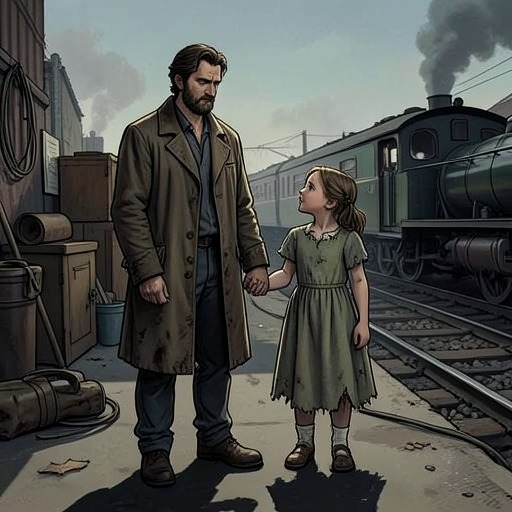
The Passage (Justin Cronin Edition)The Colorado Fever Outbreak and Year Zero marks the collapse of ordinary political and social life and the beginning of a new historical order. First encountered through newspaper reports read by Bradford J. Wolgast as he protects Amy, the outbreak is presented not as one isolated disaster but as a cascade: illness, violence, border closures, military retreat, displacement, and the breakdown of reliable public knowledge. Wolgast’s conclusion that humanity has been overcome by events gives the crisis its defining meaning: the old world has not simply suffered an emergency; it has lost the capacity to contain it.
The outbreak becomes public knowledge
The crisis reaches Wolgast in fragments. At Milton’s Dry Goods, he finds a copy of USA Today whose entire issue amounts to two folded sheets. Its headline announces that Colorado has been overrun by a “Killer Virus,” with borders sealed and outbreaks reported in Nebraska, Utah, and Wyoming. The smallness of the paper contrasts with the scale of what it reports: a national emergency compressed into a few pages, already difficult to distinguish from rumor and official messaging.
The report dates the president’s first address to May 18, eight days after the crisis began. The administration describes Colorado fever as a deliberate attack by extremists and promises both containment and punishment, while offering no details of the alleged evidence. Meanwhile, the virus is reported in neighboring states, domestic and international air travel is halted, and Colorado’s borders are closed. The announcement presents a government asserting control at the very moment the reported spread demonstrates how quickly control is slipping away.
The reported symptoms include dizziness, vomiting, and high fever, with an incubation period as short as six hours. Some patients, the article says, develop markedly increased strength and aggression. An anonymous Colorado health official reports that patients are killing others and that hospitals have become war zones; the Centers for Disease Control spokesman calls some accounts hysteria while conceding that communication with officials inside the quarantine zone has broken down. The official fatality estimate reaches as high as fifty percent, but the same report acknowledges that authorities cannot establish what is happening inside the zone. The epidemic is therefore defined both by its danger and by the failure of institutions to know or communicate its full extent.
From quarantine to national breakdown
The first newspaper’s account already shows emergency measures producing a crisis of movement. Cities including Denver, Colorado Springs, and Fort Collins have been placed under martial law, while residents flee despite orders to “evacuate in place.” Reports that federal forces may use deadly force against refugees remain unconfirmed, as do reports that the National Guard is moving ill people from hospitals to an undisclosed location. The uncertainty matters: citizens are acting amid fragmentary information, while authorities use quarantine, military deployment, and population control to manage a threat they cannot clearly describe.
A later issue, dated July 10 and found among the belongings of Carl and Martha, records a much wider collapse. The headline reports that the “Vampire” virus has reached the East Coast, that millions are dead, and that the quarantine line has shifted east to central Ohio. The paper says Chicago has fallen after infected people overwhelmed Army and National Guard forces near the South Loop. The government withdraws from the city and establishes a new defensive line between Toledo and Cincinnati, while casualty estimates exceed thirty million dead and another three million infected. Officials deny reports of troops abandoning their posts even as the perimeter retreats, leaving the language of reassurance increasingly at odds with events.
The same report describes major portions of St. Louis, Memphis, Tulsa, and Des Moines burning, with the cause of the fires officially unconfirmed. It also records scarce fuel, shortages of food and medical supplies, and refugees stranded on roads with no clear destination. A family’s journey from Akron toward Johnstown, normally a two-hour drive, has taken twenty hours; their intended refuge may itself be affected. These accounts make the catastrophe legible through more than casualty totals: it dismantles the ordinary systems that make movement, care, and shelter possible.
Fragmenting authority and competing explanations
As the outbreak spreads, national authority ceases to be uncontested. The United Nations passes an international quarantine resolution forbidding ships and aircraft from approaching within two hundred miles of North America. European states close borders or restrict travel. Within the United States, California declares itself a sovereign republic and places federal military and law-enforcement assets in the state under the California National Guard. The federal administration rejects the secession and warns that personnel resisting its authority will be treated as unlawful enemy combatants. The crisis thus produces not merely a common enemy but a struggle over who can command resources and define legitimate action.
Political and religious explanations also diverge. The White House attributes the epidemic to anti-American extremists without disclosing supporting evidence; public-health officials admit that communication has failed. In Texas, Houston’s mayor presents the crisis in explicitly religious, end-times terms and urges people to gather at the stadium in expectation of salvation. Across the country, churches and synagogues report record attendance. These responses do not resolve the uncertainty. They show how people and institutions reach for competing frameworks—national security, public health, sovereignty, and faith—when no account can make the events manageable.
Wolgast’s reckoning and Year Zero
Wolgast reads the July report after losing the shelter and fragile routine that had briefly surrounded him and Amy. He understands that the catastrophe has advanced on a scale that no single article can contain: between their arrival at the camp on May 2 and the news reported in July, the world has changed within weeks. The newspapers offer the public chronology, but his reading turns that chronology into a personal recognition. The term he recalls from aviation is OBE, “Overcome by events”; now, he understands, it applies to the human race.
His response is practical as well as interpretive. He gathers food, batteries, propane, fuel, and weapons, keeps watch through the night, and burns the newspaper after reading it. The printed account has given him vital information, but it cannot offer a dependable future or a place to return to. Its destruction makes visible the difference between knowing that the old order has failed and being able to do anything about that failure. Wolgast’s immediate obligation is to keep Amy safe, not to restore the system that has collapsed.
The idea of an age beginning at zero acquires a longer afterlife than the emergency reports themselves. In Ida Jaxon’s recollection of the children arriving at the settlement that becomes the Sanctuary, Terrence explains the walls and lights as protection until the war is over and compares the place to Noah’s ark. The children’s evacuation and the story of the flood translate catastrophe into a language of refuge and survival. Elsewhere, Wolgast’s earlier reading of the biblical account of Noah—that Noah lived nine hundred and fifty years and died—had helped him recognize the personal reason federal agents had selected him: his grief over Eva. Together, these episodes give the Noah image both a public and a private resonance, linking mass survival to the intimate losses that shape the survivors.
Consequences and narrative significance
Year Zero is less a single instant than the name for a rapid, uneven process. The newspaper chronology shows the disease spreading and state capacity retreating; the later life of the survivors shows how that rupture is carried forward in evacuation, guarded settlements, and inherited memories. The papers’ shifting headlines compress enormous change into a sequence of brief reports, while Wolgast’s reading supplies a human measure of their scale: each new fact narrows the space in which ordinary plans remain possible.
The outbreak also establishes a recurring conflict between fear and collective action. Years later, in the First Colony, residents blame Amy and Caleb for deaths and turn apprehension into a chant demanding that they be expelled. In Haven, Olson describes a system in which four animals and two people are offered at each new moon to keep the Many away. These later events are not the outbreak itself, but they echo its central social pressure: danger and uncertainty can make populations seek a target, accept coercive arrangements, or surrender judgment to a crowd. Against that pattern, Wolgast’s commitment to protect Amy and the children’s promise to look after one another preserve fragile, personal forms of responsibility.
The event’s decisive consequence is therefore both historical and moral. The former United States cannot maintain its borders, communications, or command over its own territory, and the survivors inherit a world organized around containment and the memory of loss. The name Year Zero expresses the break, but the story resists treating the catastrophe as a clean beginning: people carry grief, old beliefs, and obligations across it. The new age starts not with a settled explanation of what happened, but with the work of protecting others when institutions and assurances have failed.